

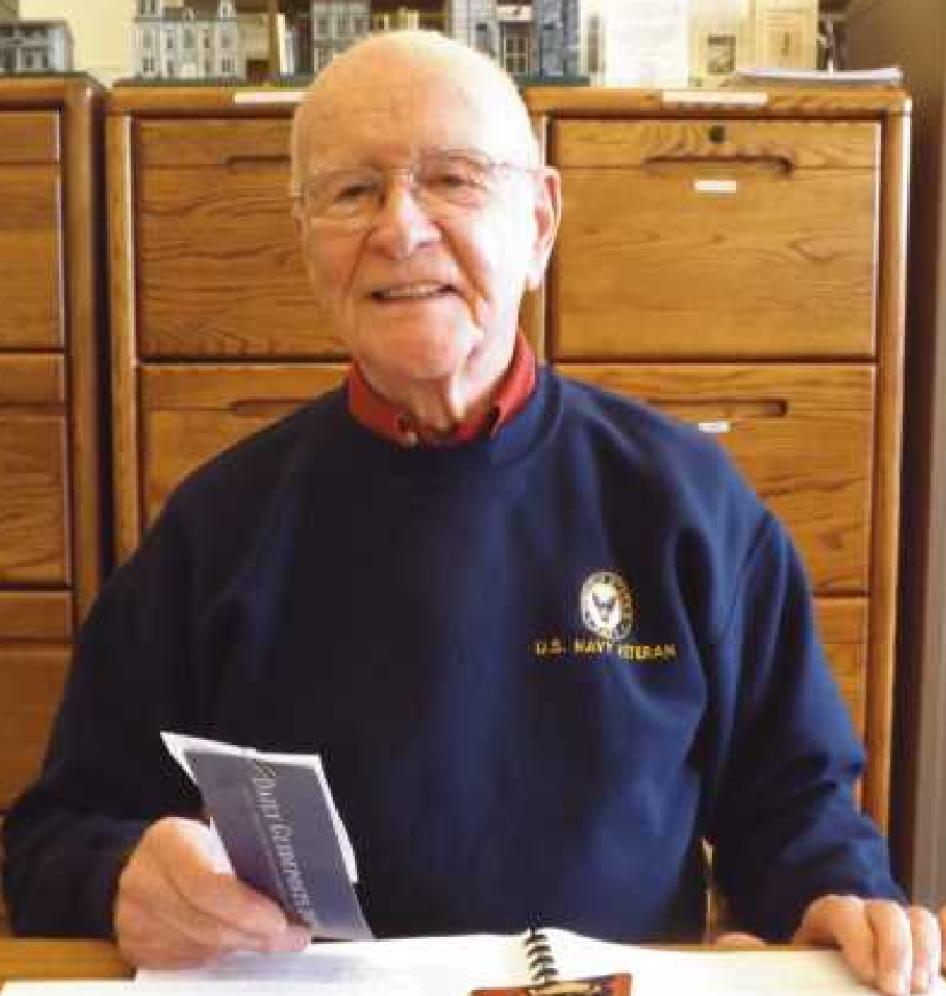
When this article was first written, World War II veteran William Brooks was reluctant to share it publicly. His son, Chris, said perhaps because his dad didn’t believe he did anything important enough to warrant such attention.
Quiet modesty is a trait of the Greatest Generation, of which Mr. Brooks is a member. Feeling a change of heart, the alive and well 95-year-old WWII veteran decided he would be pleased for readers to hear his story.
Mr. Brooks was born in Newark, Ohio, in 1926. “My father was a house painter and interior decorator. He made a pretty good living, until the Depression. The winters were especially tough. So in 1936, the family packed up for Florida. Dad found a job in West Palm Beach, where the rich people came from the north and lived in mansions. We kept our house in Newark and went back home in the summers.
Mr. Brooks was 15 years old when Pearl Harbor was bombed. “I was listening to the radio. The Detroit Lions were playing the Cleveland Rams, the Browns today. They interrupted the game to say that the Japanese had attacked Pearl Harbor.
“I had heard of Hawaii, but not Pearl Harbor. When dad came home, we all stayed up late listening to the radio. Reports indicated that Japanese were sighted over California as well, which really frightened us. It turned out not to be true, but the details from Pearl Harbor were.
“The next day President Franklin Roosevelt declared war on the Japanese. We heard him announce it over the radio through the loudspeaker at school. The next day we heard him declare war on Germany and the Axis Powers. So, now we were at war in the Pacific and Europe.
“The seniors wanted to go right out and enlist. Everybody wanted to go in. There was tremendous support by the people. The war affected everybody’s life, although not ours immediately. I was 15, draft was from 18 to 26 so neither my dad nor I were eligible.
“Everything took a backseat to the war. Nobody knew how long it would last, although nobody thought it would last as long as it did. Peacetime economy was converted to military production. There was rationing. Rubber products, sugar, meat and gasoline were the most prevalent.
“Then my dad did something crazy. He went with a friend over to Zanesville who was enlisting in a Navy construction battalion known as the Seabees. The Seabees would go in right after the Marines and put in airstrips, roads, and buildings, sometimes under fire. A recruiter there talked my dad into joining. He was 39 years old. My mother was fit to be tied.
“My dad ended up in Rhode Island. He did such a good job fixing up the officers’ houses there on the base that they wouldn’t let him go. He joked that he spent the whole war on an island– Rhode Island!”
Mr. Brooks was still attending high school, but eager to join the Navy. In the meantime, he worked summers at the Newark Stove Company. It was a sweaty, physical job, handling greasy parts from an assembly line, inhaling all sorts of toxic fumes. But he made $1.05 an hour, a very good wage then as a loaf of bread cost nine cents.
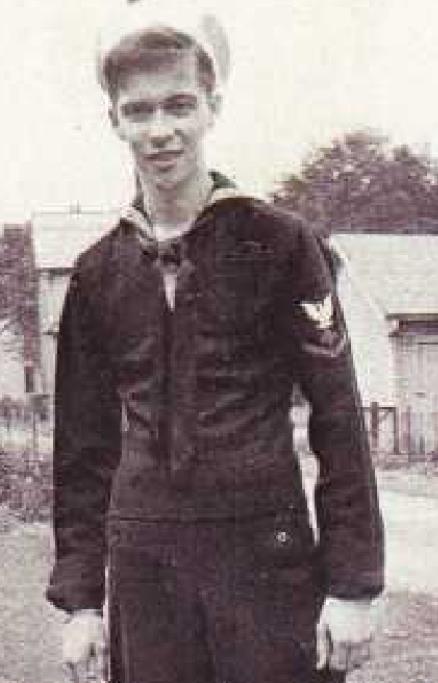
“I graduated at 17, but my mother would not let me enlist until I was 18 in October. She was worried. The war was taking lives. You’d walk in your neighborhood and see banners in the windows with blue or gold stars. The blue stars represented the people from that house in the service. The gold star represented the ones who died.”
“I picked the Navy because my dad was already in it, and I had read all those things about Annapolis and the ships when I was young. So, my mind was already made up.”
Mr. Brooks went to boot camp at Great Lakes. “After the first day or so, they gave us a $5 chit. We had not been paid yet, which was $52 a month. A guy would give you $5, and then you’d give it to another guy for a sack of razor blades, toothpaste and toothbrush to get you by until the first pay. They called this the ‘flying five,’ because you got it in one hand and gave it right away with the other,” he said, laughing.
“I was pretty homesick, as were a lot of guys. You could hear guys snuffling at night. It affected me most in the morning. Since my dad went in the service, I got to know my mother really well, and I always had coffee with her before I went to school. I missed being with my mother those mornings.
“Boot camp was calisthenics, learning how to swim, rowing boats and even some training on 20- and 40-mm guns. There was firefighting school. They’d soak a real building in fuel and set it on fire.
“It could wear you down. And discipline! You’d get demerits if your sea bag was hanging too low on your jackstay. You’d have to work those demerits off, standing attention for an hour. One time, I snuck through the chow line twice, which could have been trouble. But at 120 pounds, I was always trying to gain weight.”
Mr. Brooks took some tests. He had his choice between radio, radar or hospital corps. He picked medicine and right after Christmas 1944, he was sent to Naval Hospital Corps School in Farragut, Idaho. It was 12 weeks of instruction in preparation to serve in hospital sick bay aboard ships or with a platoon of Marines in action, as they did not have a medical corps. He learned how to give shots and vaccinations, draw blood and suture minor cuts.
“I remember there were German POWs in Farragut–and happy to be there. They mostly worked the chow line, and they looked so young. I thought things must be getting pretty rough over there. Then I thought they must be thinking the same as us. I looked like a baby when I was 18,” he said.
After training, Mr. Brooks returned to Great Lakes. He remembered working 30 straight nights at the hospital there. “The hospital was designed with ramps that led to wards. I was put in charge of four wards with no help except a ramp nurse. But you, the corpsman, were in charge. I gave all the medications and did all charting.”
Just about that time, President Roosevelt died.
“We were shocked, but not surprised. There were rumors he was pretty bad off, but we didn’t have television in those times so much of the country was not aware. The press would not take pictures of him when he was really bad and even before, they never took pictures of him in his wheelchair.
“At the beginning of May, the Germans surrendered. Now we knew where we would be going. We would be either with the Pacific fleet or the Marine Corps and probably in Japan, as Okinawa was being fought, and we knew the next invasion would be Japan itself.
“In Great Lakes Hospital, we got a lot of people that came back from Iwo Jima and other islands, hurt and wounded. One Marine I remember making friends with was in a body cast. Eddie would kid me and say, ‘Hey doc, we’ve got more time in the hospital than you got in the Navy!’ I learned a lot from these men and I developed a great admiration for the Marine Corps. In the meantime, we were still being trained for the invasion. That’s when they dropped the bombs.
“We had no idea the United States possessed such a weapon. I don’t even remember seeing any pictures in the newspaper after the bombing. I didn’t realize, until the war was over, what an atom bomb would do. I just knew the Japanese surrendered and everything froze.”
Mr. Brooks was sent to the air naval station in Minneapolis. As a hospital corpsman, he was put to work in the separation center there, giving those discharged physical exams. “I stayed there until August of 1946. Most being discharged were from the Pacific Theatre. It was good duty and no nights.
“My dad came home and decided to stay in the Navy and went to work at the Columbus Naval Air Station. He told me I might as well stay in. The NAS had a great sign-up deal. I could go to college and get paid to work one weekend a month in sick bay.”
Mr. Brooks began attending Ohio State University on the GI Bill, “the best bill Congress ever passed,” he said.
“I was pre-med. My dad wanted me to be a doctor, but I wasn’t so sure myself. Then I ran into a tough chemistry course–qualitative analysis. I could never understand it. I changed to business.”
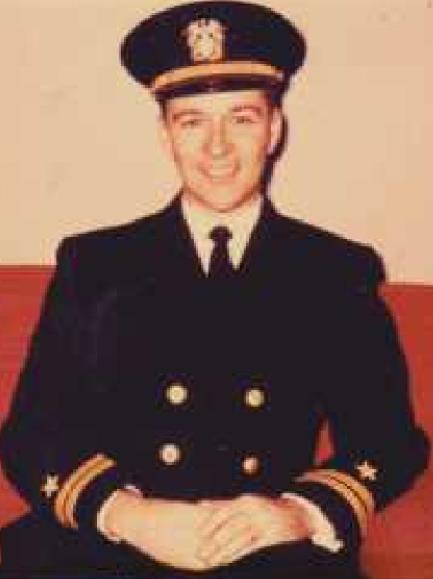
Mr. Brooks stayed in the Navy Reserves until 1958. In the meantime, he graduated from college, met and married his wife Peggy Binkley and began his career as a cost analyst with Owens Corning in Newark. He was transferred to the Toledo office in 1963 and moved to Perrysburg.
“I enjoyed my time in the service,” Mr. Brooks said. “As a hospital corpsman, I saw a lot of wounded sailors and Marines. It felt good helping them recuperate and see them getting out. So many brave people. I didn’t do anything big in World War II, wasn’t in any big battles or served on a ship, but I felt good about what I was doing. And, I thank the Navy for that.” Richard Baranowski is a
librarian at Way Public Library and has a passion for history.