

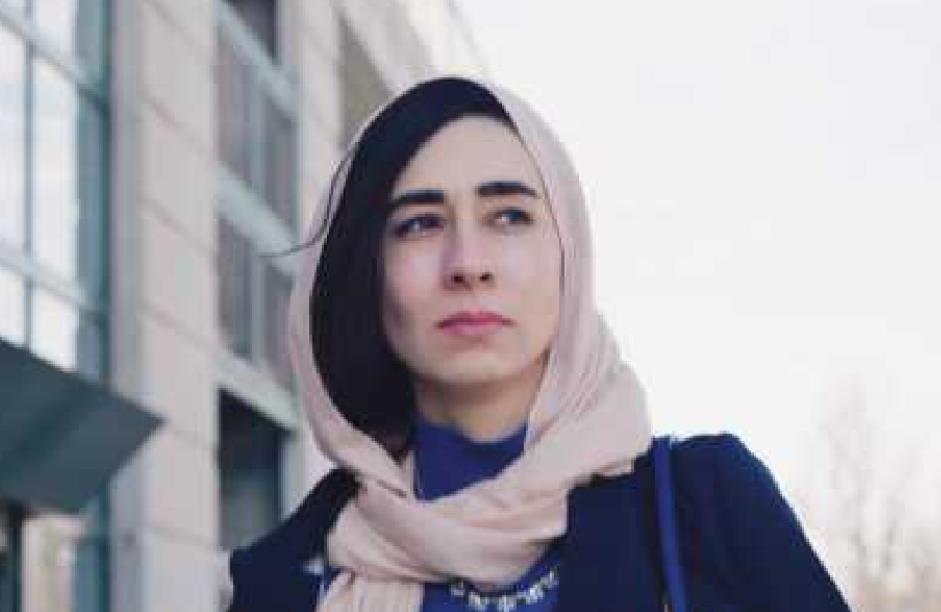
Perrysburg Messenger Journal asked local attorney Reem Subei some questions to honor Women’s History Month.
Ms. Subei joined Advocates for Basic Legal Equality in 2016, continuing her career in civil rights advocacy, representing organizers, tenants, immigrants, detainees and children with disabilities. She also cochairs the Perrysburg Coalition for Inclusion and Social Justice.
Q. What motivated you to become an attorney?
Shifting power. I remember when I was a child and heard a family friend describe how the system failed to save her from an abusive relationship. Even after being hospitalized due to the abuse, nobody helped her. Why? Her abuser accused her of lying and blamed her claims on her mental health. And because of his power and wealth, his word was taken over hers. That was when I realized that ending injustice requires a shift in power and economic opportunities.
Q. Why did you choose to work for ABLE, and what kind of work do you do there?
ABLE allows me to use legal tools to help people in poverty achieve self-reliance, equal justice and economic opportunity. My work includes litigation and policy advocacy to reduce evictions, expand fair housing access, improve jail conditions and ensure equity in education and economic development.
Q. What do you see as the most important milestones in U.S. women’s history in the 20th century?
There are many important milestones in our history that got us to where we are today and many ongoing efforts to get us to a better place.
Important laws were enacted; the 19th Amendment of 1920, the Equal Pay Act of 1963, the Civil Rights Act of 1964 and many others. But laws are only put in place after people organize and speak out against injustice. So when I think of the most important milestones in U.S. women’s history, I think of Sojourner Truth’s 1851 speech, a former slave turned abolitionist and women’s rights activist; I think of Rosa Parks’ refusal to leave her seat in 1955; and I think of Elizabeth Cady Stanton and Susan B. Anthony when they formed the National Woman Suffrage Association in 1869.
Q. In the 21st century, what challenges for women remain?
As a group, women and girls lag behind men and boys in almost every metric of social and economic power globally.
Despite the Equal Pay Act, women still make less money than men. Despite the Civil Rights Act, women still face barriers to career advancement and are penalized directly and indirectly for pregnancy and birth.
And, of course, the problem of incarceration. The female incarcerated population in the U.S. stands over seven times higher than in 1980. More than 60 percent of women in state prisons have a child under the age of 18. Between 1980 and 2019, the number of incarcerated women increased by more than 700 percent, rising from a total of 26,378 in 1980 to 222,455 in 2019.
This is the result of more policing, stiffer drug sentencing laws and post-conviction barriers to re-entry that uniquely affect women.
These are challenges we must continue to address. We must continue to destroy barriers to equal participation in economic development, education, leadership and so much more.
Q. What connects the struggle for women’s rights globally?
All women, everywhere, share the desire for a recognition of their full humanity. It sounds so basic because it is a basic human right, but we have not achieved it.
Women who work in factories and need jobs that accommodate their health, women who don’t work and need financial assistance, women who are CEOs and need to be respected without having to follow masculine codes of conduct–the list is too long–they are all connected through their struggle for basic human rights.
A new Gender Social Norms Index released by the United Nations Development Program measures how social beliefs obstruct gender equality in areas like politics, work and education. This index, which contains data covering over 80 percent of the world’s population, reveals that despite decades of progress closing the equality gap between men and women, close to 90 percent of men and women hold some sort of bias against women.
I imagine a world with equity for all women, that gives every woman the tools she needs for what she defines as success.
Q. Who are the women in the forefront working for women’s rights today?
I will abstain from naming some women without others. What I will say is that we must celebrate women who set up small businesses in their communities to create jobs, women who spend their money in their blocks, women who lead labor movements, women who expose political and corporate corruption and those risking their lives to make healthcare available to other women.
Q. How can parents and teachers of girls help to empower the girls in their care?
Teachers and parents should send a clear message to these girls: Women's oppression is not natural, it is historical. It is thousands of years old, but together we can put an end to it.
Sometimes we get caught up thinking that there needs to be a competition between us as women. Parents, teachers and every single one of us must strive to make more opportunities available for all, not just some, girls.
This can be as simple as helping them with applications to top tier universities or as complex as connecting them with investors so they can start their own business. We must reject the notion to compete with each other and instead build solidarity in our efforts towards a progressive vision of the future.
And we must remember that milestones in women’s history are not complete until equity for women has reached all women, and all people.